


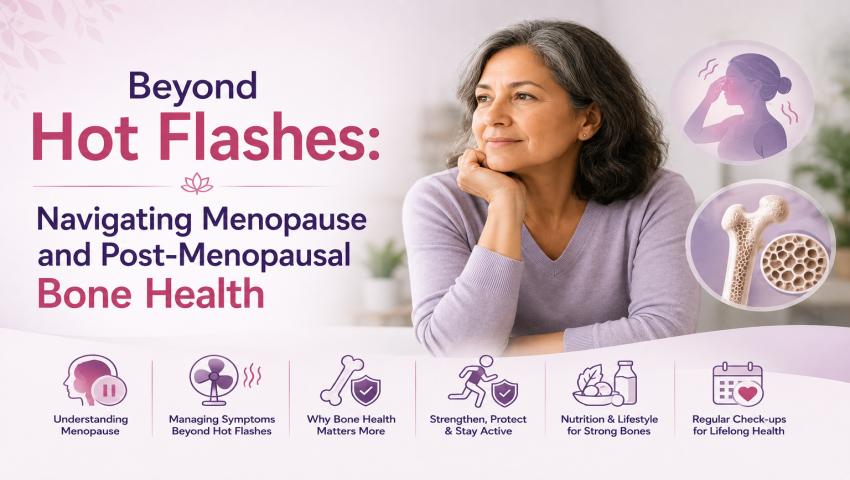
When women talk about menopause, the conversation almost always centers around the immediate, highly visible symptoms: sudden hot flashes, night sweats, erratic mood swings, and insomnia. While these symptoms are undoubtedly challenging, they represent only the surface of a major biological transition.
As the ovaries gradually wind down their production of estrogen, systemic changes occur deep within a woman’s body. One of the most silent, profound, and frequently overlooked areas affected by this transition is the skeletal system.
Menopause marks the beginning of a critical phase for bone health. Without the protective umbrella of estrogen, women face a highly accelerated risk of developing osteoporosis—a condition characterized by fragile, porous bones that are highly susceptible to sudden fractures. Navigating this phase successfully requires looking beyond temporary comfort and focusing on long-term structural wellness.
The Estrogen-Bone Connection Explained:
To appreciate why menopause triggers bone loss, we have to look at how our bones continuously rebuild themselves. Throughout your life, your skeletal system undergoes a continuous process of remodeling. Old bone tissue is broken down by specialized cells (osteoclasts) and replaced by new bone tissue generated by building cells (osteoblasts).
{Bone Remodeling Rate} = {Rate of Bone Formation} – {Rate of Bone Resorption} $$
Estrogen plays a key regulatory role in this delicate equation. It acts as a natural brake on the cells that break down bone, keeping the skeletal structure dense and strong.
During menopause, as estrogen levels drop sharply, this protective brake is removed. The rate of bone breakdown quickly outpaces the rate of new bone formation. In fact, research indicates that women can lose up to 20% of their total bone density during the first five to seven years following menopause, leaving them highly vulnerable to structural weakness.
Osteoporosis: The Silent Thief of Mobility
The primary danger of post-menopausal bone loss is that it is completely asymptomatic in its early stages. A woman cannot “feel” her bones becoming weaker. Often, the very first symptom of osteoporosis is a painful, unexpected fracture resulting from a minor slip, a simple trip, or even a strong sneeze.
These fractures most commonly occur in the wrists, spine, and hips. Spine fractures can lead to a gradual loss of height, a stooped posture (often called a dowager’s hump), and chronic, debilitating back pain. Hip fractures are even more severe; they drastically compromise independent mobility and can trigger a cascade of secondary health complications in older age.
Proactive Strategies to Protect Your Skeleton:
The good news is that post-menopausal bone decay is highly preventable and manageable if proactive steps are taken early.
1. Prioritize Calcium and Vitamin D Synergy:
Calcium is the primary building block of bone tissue, but your body cannot absorb it efficiently without an adequate supply of Vitamin D.
- Dietary Calcium: Incorporate calcium-rich foods like low-fat milk, yogurt, paneer, green leafy vegetables (ragi, spinach), and fortified foods into your daily diet.
- Vitamin D: Spend 15-20 minutes in morning sunlight daily. If your blood tests reveal a deficiency, consult a physician for appropriate clinical supplementation.
2. Engage in Weight-Bearing and Resistance Exercises:
Bones behave much like muscles—they grow stronger when subjected to safe physical stress. Engage in weight-bearing exercises such as brisk walking, jogging, climbing stairs, or low-impact aerobics for at least 30 minutes a day, five days a week. Pair this with light resistance training or yoga to improve core strength, balance, and coordination, which drastically reduces your risk of accidental falls.
3. Undergo a DEXA Scan:
A Dual-Energy X-ray Absorptiometry (DEXA) scan is a quick, completely painless imaging test that measures your precise bone mineral density (BMD). It is the gold standard for diagnosing osteopenia (early bone thinning) and osteoporosis long before a fracture occurs.
Comprehensive Women's Wellness at Dr. Maid Hospital:
At Dr. Maid Multispeciality Hospital, we understand that a woman’s health journey changes dramatically after 40. Our Comprehensive Women’s Wellness Department provides holistic care designed to guide you through every stage of menopause with dignity, strength, and vitality.
We offer specialized health screening packages that include comprehensive metabolic profiles, Vitamin D and Calcium tracking, and advanced DEXA bone density scans. Our multidisciplinary team—comprising experienced gynecologists, orthopedic specialists, and expert nutritionists—collaborates to design highly personalized care plans. These range from customized dietary adjustments and targeted exercise regimens to advanced pharmacological therapies aimed at slowing down bone resorption.
Menopause is not the end of your active life; it is simply the beginning of a new chapter. By taking decisive charge of your bone health today, you can protect your long-term independence, preserve your active lifestyle, and move forward with absolute confidence.