
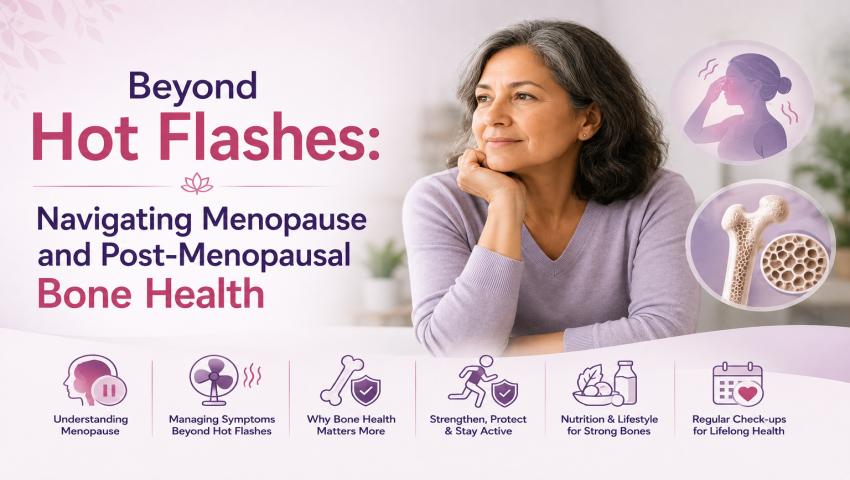
Beyond Hot Flashes: Navigating Menopause and Post-Menopausal Bone Health

When women talk about menopause, the conversation almost always centers around the immediate, highly visible symptoms: sudden hot flashes, night sweats, erratic mood swings, and insomnia. While these symptoms are undoubtedly challenging, they represent only the surface of a major biological transition.

As the ovaries gradually wind down their production of estrogen, systemic changes occur deep within a woman’s body. One of the most silent, profound, and frequently overlooked areas affected by this transition is the skeletal system.

Menopause marks the beginning of a critical phase for bone health. Without the protective umbrella of estrogen, women face a highly accelerated risk of developing osteoporosis—a condition characterized by fragile, porous bones that are highly susceptible to sudden fractures. Navigating this phase successfully requires looking beyond temporary comfort and focusing on long-term structural wellness.

The Estrogen-Bone Connection Explained:

To appreciate why menopause triggers bone loss, we have to look at how our bones continuously rebuild themselves. Throughout your life, your skeletal system undergoes a continuous process of remodeling. Old bone tissue is broken down by specialized cells (osteoclasts) and replaced by new bone tissue generated by building cells (osteoblasts).

{Bone Remodeling Rate} = {Rate of Bone Formation} – {Rate of Bone Resorption} $$

Estrogen plays a key regulatory role in this delicate equation. It acts as a natural brake on the cells that break down bone, keeping the skeletal structure dense and strong.

During menopause, as estrogen levels drop sharply, this protective brake is removed. The rate of bone breakdown quickly outpaces the rate of new bone formation. In fact, research indicates that women can lose up to 20% of their total bone density during the first five to seven years following menopause, leaving them highly vulnerable to structural weakness.

Osteoporosis: The Silent Thief of Mobility

The primary danger of post-menopausal bone loss is that it is completely asymptomatic in its early stages. A woman cannot “feel” her bones becoming weaker. Often, the very first symptom of osteoporosis is a painful, unexpected fracture resulting from a minor slip, a simple trip, or even a strong sneeze.

These fractures most commonly occur in the wrists, spine, and hips. Spine fractures can lead to a gradual loss of height, a stooped posture (often called a dowager’s hump), and chronic, debilitating back pain. Hip fractures are even more severe; they drastically compromise independent mobility and can trigger a cascade of secondary health complications in older age.

Proactive Strategies to Protect Your Skeleton:

The good news is that post-menopausal bone decay is highly preventable and manageable if proactive steps are taken early.

1. Prioritize Calcium and Vitamin D Synergy:

Calcium is the primary building block of bone tissue, but your body cannot absorb it efficiently without an adequate supply of Vitamin D.

  • Dietary Calcium: Incorporate calcium-rich foods like low-fat milk, yogurt, paneer, green leafy vegetables (ragi, spinach), and fortified foods into your daily diet.
  • Vitamin D: Spend 15-20 minutes in morning sunlight daily. If your blood tests reveal a deficiency, consult a physician for appropriate clinical supplementation.
2. Engage in Weight-Bearing and Resistance Exercises:

Bones behave much like muscles—they grow stronger when subjected to safe physical stress. Engage in weight-bearing exercises such as brisk walking, jogging, climbing stairs, or low-impact aerobics for at least 30 minutes a day, five days a week. Pair this with light resistance training or yoga to improve core strength, balance, and coordination, which drastically reduces your risk of accidental falls.

3. Undergo a DEXA Scan:

A Dual-Energy X-ray Absorptiometry (DEXA) scan is a quick, completely painless imaging test that measures your precise bone mineral density (BMD). It is the gold standard for diagnosing osteopenia (early bone thinning) and osteoporosis long before a fracture occurs.

Comprehensive Women's Wellness at Dr. Maid Hospital:

At Dr. Maid Multispeciality Hospital, we understand that a woman’s health journey changes dramatically after 40. Our Comprehensive Women’s Wellness Department provides holistic care designed to guide you through every stage of menopause with dignity, strength, and vitality.

We offer specialized health screening packages that include comprehensive metabolic profiles, Vitamin D and Calcium tracking, and advanced DEXA bone density scans. Our multidisciplinary team—comprising experienced gynecologists, orthopedic specialists, and expert nutritionists—collaborates to design highly personalized care plans. These range from customized dietary adjustments and targeted exercise regimens to advanced pharmacological therapies aimed at slowing down bone resorption.

Menopause is not the end of your active life; it is simply the beginning of a new chapter. By taking decisive charge of your bone health today, you can protect your long-term independence, preserve your active lifestyle, and move forward with absolute confidence.
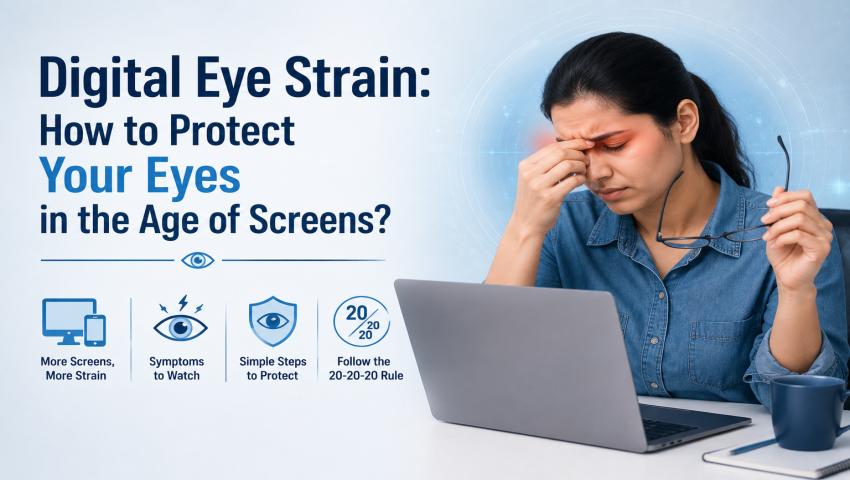
Digital Eye Strain: How to Protect Your Eyes in the Age of Screens

From the moment our alarms go off in the morning to the final scroll through social media before bed, our eyes are locked in a continuous battle with digital screens. Whether you are a software professional working in Hinjewadi, a student attending online classes, or someone who loves catching up on digital entertainment, screens have become an inseparable part of modern life.

However, our eyes were never evolutionarily designed to stare at bright, artificial, high-contrast light sources for hours on end. The result? A rapidly growing global health epidemic known as Digital Eye Strain (DES), or Computer Vision Syndrome (CVS).

If you frequently experience headaches, blurry vision, or a burning sensation in your eyes by mid-afternoon, your screens are taking a heavy toll. Fortunately, protecting your vision does not mean giving up your digital devices completely.

The Mechanics of Digital Eye Strain:

To protect your eyes, it helps to understand why screens cause so much fatigue compared to reading a physical book.

First, digital devices emit high-energy visible (HEV) blue light, which scatters easily and reduces visual contrast, forcing the eye muscles to work harder to maintain focus. Second, characters on a screen do not have the sharp, well-defined edges of printed ink; they are made up of tiny pixels that continuously refresh, requiring the eye to constantly refocus.

Most importantly, we forget to blink. On average, a human being blinks about 15 to 20 times per minute. This action spreads a fresh, protective layer of tears over the cornea, keeping the eye moist and clean. However, when staring intently at a computer or smartphone screen, our blink rate drops by more than 50%. This prolonged exposure causes the tear film to evaporate rapidly, leading to severe dryness, inflammation, and irritation.

Red Flags: Symptoms You Shoudn't Ignore

Digital Eye Strain isn’t just about feeling “tired.” It manifests through a spectrum of physical discomforts:

  • Dry, red, irritated, or burning eyes
  • Frequent, dull headaches originating behind the eyes or in the forehead
  • Blurred or double vision, especially when looking up from a screen
  • Difficulty shifting focus between distant and near objects
  • Neck, shoulder, and back pain caused by poor posture while viewing devices

Practical Strategies to Shield Your Sight:

You can drastically reduce the impact of Computer Vision Syndrome by implementing a few simple, scientifically proven adjustments to your daily routine:

  • Master the 20-20-20 Rule: This is the golden rule of digital wellness. Every 20 minutes, take a break from your screen and look at an object at least 20 feet away for a minimum of 20 seconds. This simple exercise allows the ciliary muscles inside your eyes to relax completely, preventing chronic accommodation spasms.
  • Optimize Your Workstation Ergonomics: Position your computer screen so that the top of the monitor is at or slightly below eye level. You should be looking slightly downward at your work, which exposes less of your eyeball’s surface area to the air, minimizing tear evaporation. Keep the screen roughly an arm’s length (20 to 28 inches) away from your face.
  • Control Ambient Lighting and Glare: Harsh overhead fluorescent lighting or direct sunlight streaming through windows forces your eyes to strain against the screen’s reflection. Use anti-glare screen filters, position your monitor away from direct window light, and adjust your screen’s brightness so it matches the ambient light level of the room you are in.
  • Consciously Practice Blinking: Post a sticky note on your monitor that says “Blink!” It sounds simple, but retraining your brain to blink fully and frequently while reading digital text is one of the most effective remedies against dry eye syndrome.

Advanced Ophthalmology Care at Dr. Maid Hospital:

While lifestyle modifications can offer immense relief, persistent eye strain can sometimes mask underlying vision problems, such as uncorrected refractive errors, astigmatism, or early-stage dry eye disease.

At Dr. Maid Hospital’s Advanced Ophthalmology Care Department, we provide comprehensive visual assessments using state-of-the-art diagnostic equipment. Our specialized eye care team evaluates your tear film quality, checks for hidden vision adjustments, and provides customized solutions—ranging from high-quality anti-reflective blue-cut lenses to advanced therapeutic eye drops for chronic dry eyes.

Your eyes are your window to the world. Do not let excessive screen time dull your vision. Schedule a comprehensive eye examination at our facility today, and let us help you build a healthier, clearer relationship with the digital world.

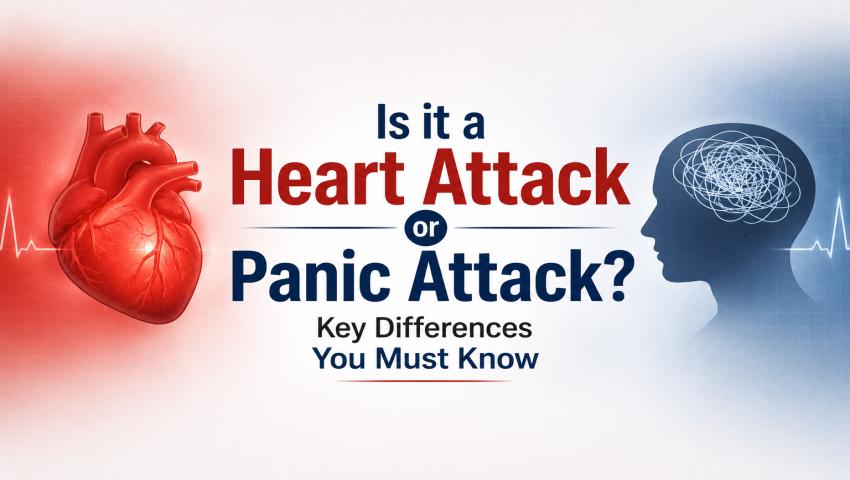
Is it a Heart Attack or Panic Attack? Key Differences You Must Know

Imagine sitting at your desk or relaxing at home when suddenly, your chest tightens. Your heart begins to race violently, your palms sweat, and a wave of overwhelming dread washes over you. In that terrifying moment, one question consumes your mind: Am I having a heart attack, or is this just a panic attack?

Because the symptoms of a severe panic attack and an acute cardiac event overlap significantly, thousands of individuals rush to emergency rooms every year facing this exact confusion. While both experiences are profoundly distressing, one is a psychological and physiological response to extreme stress, while the other is a life-threatening medical emergency requiring immediate intervention.

Understanding the critical differences between the two can not only save you from unnecessary medical anxiety but could also save your life.

Defining the Two Conditions:

To understand how they mimic each other, we must first look at what happens inside the body during both events:

  1. A Heart Attack (Myocardial Infarction): Occurs when the blood flow to a part of the heart muscle becomes severely blocked, usually by a buildup of plaque or a blood clot. Without oxygen-rich blood, the heart muscle begins to suffer permanent damage. This is a progressive, physical emergency.
  2. A Panic Attack: Is an abrupt surge of intense fear or discomfort that reaches a peak within minutes. It triggers the body’s primal “fight-or-flight” response, flooding the system with adrenaline, which forces the heart to pump faster and tightens muscles, mimicking physical cardiovascular distress.

Sizing Up the Symptoms: A Side-by-Side Comparison

While both conditions present with chest discomfort, shortness of breath, and sweating, the nuance lies in how these symptoms feel and travel.

The Critical Factor: Exertion vs. Rest

One of the most telling indicators is physical activity. If you are climbing a flight of stairs, walking uphill, or engaging in physical labor and suddenly experience crushing chest pain that worsens with movement, it points heavily toward a heart attack.

Conversely, if you are sitting quietly, experiencing high emotional stress, or going through a difficult psychological period, and a sudden wave of chest tightness hits you but resolves as you practice deep breathing, it is highly likely a panic attack.

What Should You Do in Case of Doubt?

When it comes to your heart, there is absolutely no room for guesswork. If you or a loved one experiences chest pain that lasts longer than 5 to 10 minutes, spreads to the jaw or arm, and is accompanied by a cold sweat or nausea, do not wait to see if it passes.

Emergency Action Plan:

  • Call for emergency medical help immediately.
  • Do not attempt to drive yourself to the hospital; wait for an ambulance or have someone drive you.
  • Rest quietly in a comfortable position (sitting up can help ease breathing).
  • If prescribed or advised by emergency personnel, chew an aspirin while waiting.

Comprehensive Cardiac Care at Dr. Maid Hospital:

At Dr. Maid Multispeciality Hospital in Rahata, we believe that prevention and rapid action are the dual pillars of cardiac health. If you have a family history of cardiovascular disease, suffer from chronic stress, high blood pressure, or diabetes, regular screenings are vital.

Our advanced diagnostic wing provides state-of-the-art Echocardiography (Echo), Electrocardiogram (ECG), and comprehensive cardiac stress testing to evaluate your heart health accurately. Our 24/7 Emergency Department is fully equipped with life-saving technology and led by top medical professionals to handle acute cardiac emergencies instantly.

Never ignore what your body is trying to tell you. Whether it is an anxiety-induced panic attack that requires compassionate psychiatric and therapeutic support, or a cardiac event requiring immediate medical intervention, our multidisciplinary team near Shirdi is here to guide you back to total health.

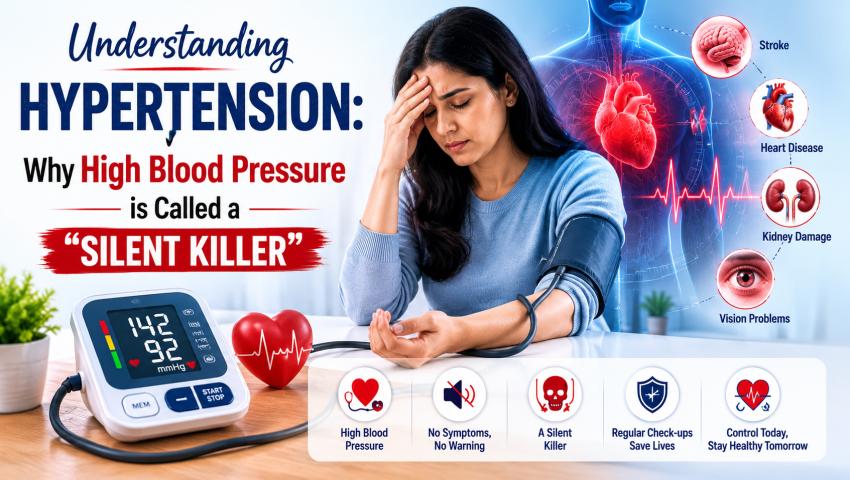
Understanding Hypertension: Why High Blood Pressure is Called a “Silent Killer”?

Imagine a patient walking into a clinic for a routine eye check-up or a standard employment health clearance, feeling perfectly energetic, healthy, and symptom-free. Yet, when the medical nurse wraps the blood pressure cuff around their arm, the digital monitor flashes an alarming reading: 160/100 mmHg.

This common scenario unfolds daily in medical clinics across the country. It perfectly illustrates why hypertension (high blood pressure) is universally dubbed by medical professionals as the “Silent Killer.”

Unlike a common cold, an infection, or arthritis, which immediately announce themselves through pain, fever, or physical discomfort, high blood pressure can quietly damage your internal organs for decades without causing a single obvious symptom. Left unchecked, this silent strain dramatically increases the risk of catastrophic events like strokes, heart attacks, and permanent kidney failure.

The Mechanics of High Blood Pressure:

To understand the hidden danger of hypertension, it helps to visualize your circulatory system as a complex plumbing network. Your heart acts as a central pump, forcing oxygenated blood through an extensive network of elastic muscular tubes called arteries.

When your heart beats, it pushes blood into these vessels, creating pressure against the arterial walls. This pressure naturally fluctuates throughout the day based on your activity levels and emotional state. However, when this pressure remains consistently elevated above normal levels (typically 120/80 mmHg), the condition is classified as chronic hypertension.

Staring down consistently elevated pressure means your heart must work much harder than normal to pump blood throughout your body. Over time, this excessive force micro-damages the delicate inner lining of your arteries, causing them to become stiff, thick, narrow, and scarred.

How Hypertension Quietly Damages Your Body?

Because your blood vessels supply every single cell in your body, chronic, uncontrolled arterial pressure acts as a slow, destructive force across multiple vital organ systems:

  • The Brain (Strokes): High pressure can cause the narrowed blood vessels supplying the brain to burst or become completely clogged by a blood clot. This cuts off oxygen to brain tissue, resulting in a sudden, debilitating stroke.
  • The Heart (Cardiovascular Disease): To pump against high resistance, the heart muscle naturally thickens and enlarges. Over time, this overexertion weakens the heart muscle, leading to heart failure. Additionally, damaged coronary arteries increase the likelihood of a sudden heart attack.
  • The Kidneys (Renal Failure): The kidneys rely on a dense web of microscopic blood vessels to filter waste products out of your blood. Hypertension scars these delicate vessels, diminishing the kidneys’ filtering capacity and eventually requiring dialysis or transplantation.
  • The Eyes (Retinopathy): The tiny, fragile blood vessels supplying the retina can easily burst, leak fluid, or harden under high pressure, leading to blurred vision or complete blindness.

Unmasking the Risk Factors:

While hypertension can affect anyone, certain lifestyle choices and biological factors significantly amplify your risk:

  • Excessive dietary salt (sodium) intake, which forces the body to retain fluids, increasing blood volume.
  • A sedentary lifestyle with little to no regular physical activity.
  • Chronic emotional and mental stress, which triggers frequent adrenaline rushes.
  • Obesity or being significantly overweight.
  • A direct family history of high blood pressure or early cardiovascular disease.

Taking Charge: Prevention and Management

Because hypertension is notoriously silent, the only definitive way to find out if you have it is through regular, proactive blood pressure tracking. Waiting for symptoms like severe headaches, dizziness, or nosebleeds to appear means waiting until your body has already suffered significant vascular damage.

Fortunately, hypertension is highly manageable, and often entirely reversible in its early stages, through strategic lifestyle modifications:

  • Adopt a Heart-Healthy Diet: Emphasize the intake of whole grains, fruits, fresh vegetables, and lean proteins while drastically reducing processed foods, fried snacks, and added table salt.
  • Stay Physically Active: Engage in at least 30 minutes of moderate-intensity aerobic exercise, such as brisk walking, swimming, or cycling, at least five days a week. Regular exercise naturally relaxes your blood vessels, allowing blood to flow much more smoothly.
  • Monitor Your Numbers Routinely: Keep a reliable digital blood pressure monitor at home, especially if you are over the age of 30 or have a family history of heart disease. Log your readings consistently to share with your physician.

Expert Hypertension Management at Dr. Maid Hospital:

At Dr. Maid Multispeciality Hospital, our primary goal is to catch chronic conditions like hypertension long before they lead to life-altering complications. Our comprehensive primary care and cardiology departments offer advanced vascular screenings, custom cardiovascular risk profiling, and expert guidance on medical management.

If lifestyle changes alone are not enough to bring your numbers into a safe zone, our experienced physicians will prescribe modern, highly effective antihypertensive medications tailored precisely to your body’s metabolic profile.

Remember, a normal reading on a blood pressure monitor is not just a number—it is a shield protecting your heart, brain, and kidneys. Do not wait for the “Silent Killer” to make its presence known. Visit us for a routine health check-up today and stay steps ahead on your journey to lifelong wellness.

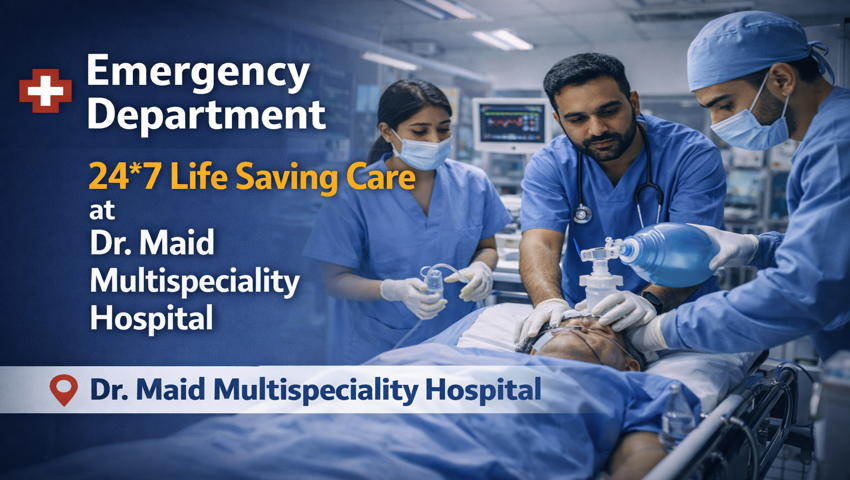
Emergency Department – 24*7 Life Saving Care

In medical emergencies, every minute is important. Quick treatment can save a life, prevent complications, and reduce recovery time. The Emergency Department at Dr Maid Multispeciality Hospital Rahata is designed to provide 24/7 emergency medical care for accidents, heart problems, breathing issues, injuries, and other critical conditions. With trained doctors, emergency staff, and essential medical equipment, the hospital is prepared to handle emergencies at any time of the day or night.

What Is an Emergency Department?

An Emergency Department (ED) is a specialized department in a hospital that provides immediate medical treatment for serious and life-threatening conditions. Patients who require urgent care are treated immediately without waiting for regular OPD timings. The main goal of the emergency department is to stabilize the patient and start immediate treatment.

Conditions Treated in Emergency Department:

The Emergency Department handles a wide range of medical emergencies such as:

  • Road traffic accidents and injuries
  • Chest pain and heart attack
  • Stroke and paralysis symptoms
  • Breathing difficulty or asthma attack
  • High fever and infections
  • Fractures and bone injuries
  • Head injury and unconsciousness
  • Poisoning or medicine overdose
  • Snake bite and animal bite
  • Severe abdominal pain
  • Burns and electric shock
  • Dehydration and severe vomiting

These conditions require immediate medical attention and should not be delayed.

24/7 Emergency Services Available:

The Emergency Department at Dr Maid Multispeciality Hospital Rahata is equipped with essential emergency facilities such as:

  • 24/7 Emergency Doctors
  • Emergency Beds
  • Oxygen Support
  • Patient Monitoring Systems
  • ICU Support
  • Emergency Procedures
  • Trauma and Injury Care
  • Basic Life Support and Advanced Life Support
  • Emergency Lab and Diagnostic Support

These facilities help in quick diagnosis and immediate treatment during emergencies.

Why Emergency Treatment Should Not Be Delayed?

Many people ignore early symptoms like chest pain, breathing difficulty, or severe headache and delay going to the hospital. This delay can be dangerous and sometimes life-threatening. Early emergency treatment can:

  • Save life
  • Prevent complications
  • Reduce hospital stay
  • Improve recovery
  • Prevent permanent damage in stroke or heart attack

The first golden hour is very important in emergencies like heart attack, stroke, and accidents.

When Should You Go to Emergency Immediately?

You should visit the emergency department immediately if you experience:

  • Severe chest pain
  • Sudden breathing difficulty
  • Loss of consciousness
  • Heavy bleeding
  • Road accident injury
  • Severe burns
  • Sudden weakness on one side of body
  • Fits or seizures
  • Snake bite
  • Severe abdominal pain
  • High fever with vomiting or confusion

In such situations, do not wait. Immediate medical care can save life.

Conclusion:

The Emergency Department at Dr Maid Multispeciality Hospital provides 24/7 life-saving emergency care for patients in Rahata and nearby areas. With trained medical staff, emergency equipment, and quick treatment facilities, the hospital is always ready to handle medical emergencies. In any emergency situation, reaching the hospital on time can make a big difference and save lives.

1 2 3 8