


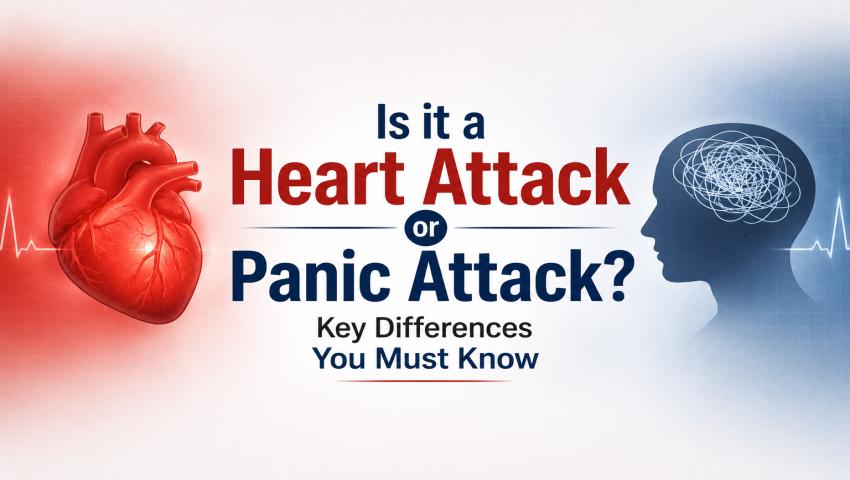
Imagine sitting at your desk or relaxing at home when suddenly, your chest tightens. Your heart begins to race violently, your palms sweat, and a wave of overwhelming dread washes over you. In that terrifying moment, one question consumes your mind: Am I having a heart attack, or is this just a panic attack?
Because the symptoms of a severe panic attack and an acute cardiac event overlap significantly, thousands of individuals rush to emergency rooms every year facing this exact confusion. While both experiences are profoundly distressing, one is a psychological and physiological response to extreme stress, while the other is a life-threatening medical emergency requiring immediate intervention.
Understanding the critical differences between the two can not only save you from unnecessary medical anxiety but could also save your life.
Defining the Two Conditions:
To understand how they mimic each other, we must first look at what happens inside the body during both events:
- A Heart Attack (Myocardial Infarction): Occurs when the blood flow to a part of the heart muscle becomes severely blocked, usually by a buildup of plaque or a blood clot. Without oxygen-rich blood, the heart muscle begins to suffer permanent damage. This is a progressive, physical emergency.
- A Panic Attack: Is an abrupt surge of intense fear or discomfort that reaches a peak within minutes. It triggers the body’s primal “fight-or-flight” response, flooding the system with adrenaline, which forces the heart to pump faster and tightens muscles, mimicking physical cardiovascular distress.
Sizing Up the Symptoms: A Side-by-Side Comparison
While both conditions present with chest discomfort, shortness of breath, and sweating, the nuance lies in how these symptoms feel and travel.
The Critical Factor: Exertion vs. Rest
One of the most telling indicators is physical activity. If you are climbing a flight of stairs, walking uphill, or engaging in physical labor and suddenly experience crushing chest pain that worsens with movement, it points heavily toward a heart attack.
Conversely, if you are sitting quietly, experiencing high emotional stress, or going through a difficult psychological period, and a sudden wave of chest tightness hits you but resolves as you practice deep breathing, it is highly likely a panic attack.
What Should You Do in Case of Doubt?
When it comes to your heart, there is absolutely no room for guesswork. If you or a loved one experiences chest pain that lasts longer than 5 to 10 minutes, spreads to the jaw or arm, and is accompanied by a cold sweat or nausea, do not wait to see if it passes.
Emergency Action Plan:
- Call for emergency medical help immediately.
- Do not attempt to drive yourself to the hospital; wait for an ambulance or have someone drive you.
- Rest quietly in a comfortable position (sitting up can help ease breathing).
- If prescribed or advised by emergency personnel, chew an aspirin while waiting.
Comprehensive Cardiac Care at Dr. Maid Hospital:
At Dr. Maid Multispeciality Hospital in Rahata, we believe that prevention and rapid action are the dual pillars of cardiac health. If you have a family history of cardiovascular disease, suffer from chronic stress, high blood pressure, or diabetes, regular screenings are vital.
Our advanced diagnostic wing provides state-of-the-art Echocardiography (Echo), Electrocardiogram (ECG), and comprehensive cardiac stress testing to evaluate your heart health accurately. Our 24/7 Emergency Department is fully equipped with life-saving technology and led by top medical professionals to handle acute cardiac emergencies instantly.
Never ignore what your body is trying to tell you. Whether it is an anxiety-induced panic attack that requires compassionate psychiatric and therapeutic support, or a cardiac event requiring immediate medical intervention, our multidisciplinary team near Shirdi is here to guide you back to total health.